Promotions and Activities


 Home
HomeParaffin Sealing Film for Labs: Uses, Types, and How to Source in Bulk
 2026-06-26
 1
1
Paraffin sealing film is one of those consumables that rarely gets attention until it runs out. Versatile, inexpensive, and used across virtually every lab discipline, it does a simple job extremely well: seal containers, prevent evaporation, and protect samples from contamination. This guide covers what paraffin sealing film is, where it is used, how to choose the right format, and what to look for when sourcing in bulk.
What Is Paraffin Sealing Film?
Paraffin sealing film is a semi-transparent, flexible film made from a blend of polyolefins and paraffin wax, backed by a paper liner for handling. It is colorless, moisture-proof, non-toxic, odorless, and self-sealing — it stretches and conforms to the shape of containers without adhesive, creating a secure seal through the material's own thermoplastic properties.
When stretched around a vessel, the film molds tightly to the surface. Body heat alone is enough to activate the seal. The result is a flexible, wrinkle-free barrier that maintains contact with irregular shapes, including round flask necks, tube caps, petri dish rims, and multi-well plate edges.
A key property that distinguishes paraffin film from other sealing options is its gas permeability. It slows moisture loss significantly but allows limited gas exchange, making it suitable for biological applications where a fully hermetic seal would be problematic.
Key Applications in the Lab
Paraffin sealing film is used across research, clinical, and industrial laboratory environments. Common applications include:
Container sealing during storage and incubation. Flasks, bottles, beakers, and test tubes sealed with paraffin film retain contents during long-term storage and resist evaporation during incubation. This is particularly valuable when storing reagents or buffers for days or weeks without tight-sealing screw caps.
Microplate and culture plate sealing. Multi-well plates — including 24-well, 96-well, and 384-well formats — can be wrapped with paraffin film to prevent cross-contamination and reduce evaporation during incubation. The film stretches to cover the plate perimeter securely without requiring specialized equipment.
Preventing contamination during transport, Cuvettes, tubes, and vials sealed with paraffin film can be safely transported between instruments or labs without the risk of spillage or airborne contamination.
Microbiology and cell culture Petri dishes are routinely sealed with paraffin film during microbial culture to limit contamination risk while still permitting sufficient gas exchange for aerobic organisms.
Electrophoresis and bench chemistry. Gel apparatus and reaction vessels can be sealed quickly to prevent buffer evaporation during extended runs.
Heat-Seal vs Manual Stretch: Which Format Works Best?
Paraffin sealing film is used in two primary ways, depending on the application and volume:
Manual stretch sealing: The standard method. A length of film is torn from the roll, the paper backing is removed, and the film is stretched and pressed around the vessel by hand. No equipment is required. The seal forms within seconds through hand pressure and mild heat. This is the approach used for the vast majority of routine bench applications — tube sealing, flask wrapping, and plate coverage.
Heat sealing. In high-throughput environments, automated heat sealers can apply paraffin film uniformly across microplate surfaces with consistent pressure and temperature. This approach reduces operator variability and is used in automated liquid handling systems, biobanking, and compound library storage where hundreds of plates need to be sealed quickly and reproducibly.
For most research labs, manual stretch sealing covers all use cases. Heat-seal formats become relevant when throughput and consistency at scale are the primary requirements.
Roll vs Pre-Cut Sheets: Packaging Options Explained
Paraffin sealing film is available in two primary supply formats:
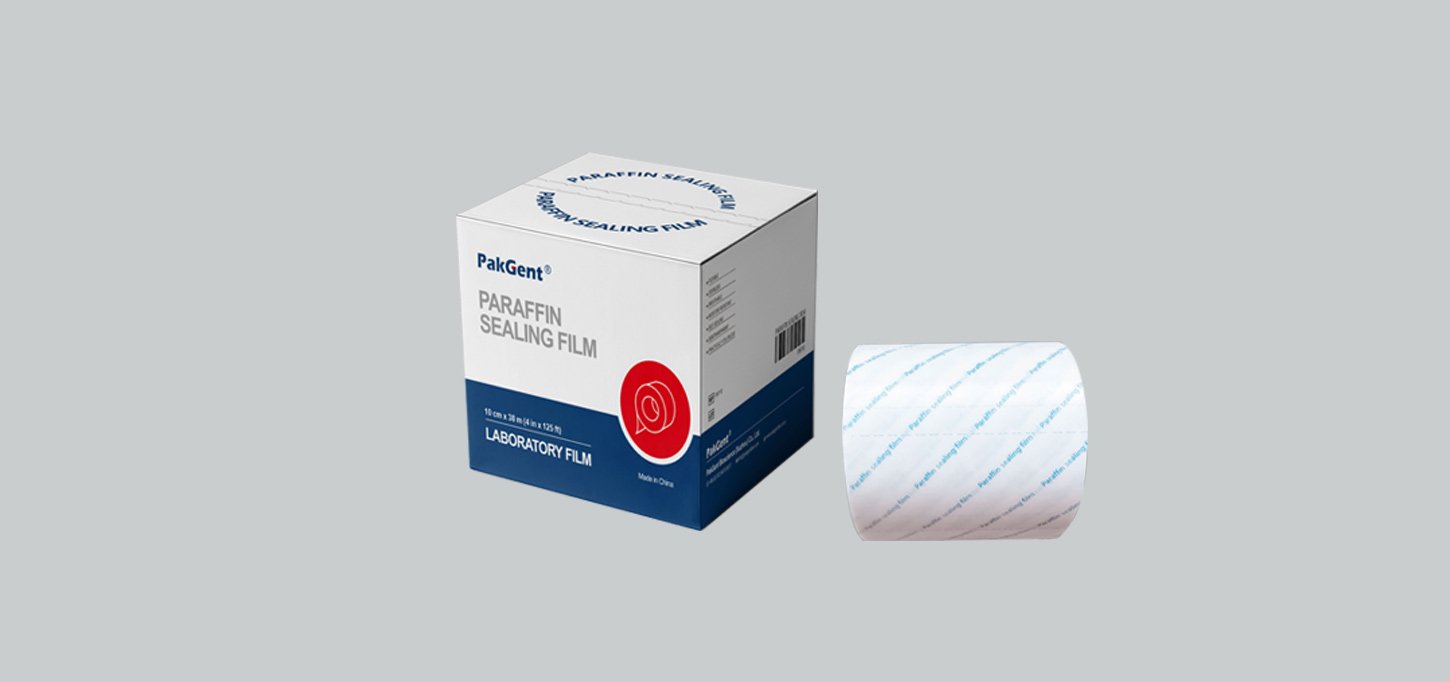
Roll format Film supplied on a roll with a paper-backed liner and a dispensing box. The user tears off the required length for each application. Roll format is the standard for general lab use — it is economical, reduces waste, and accommodates variable container sizes. Common roll widths are 4 inches (approximately 10 cm), and lengths range from 38 meters to 250 meters per roll.
Pre-cut sheets. Film supplied in individual pre-cut pieces sized for specific applications, most commonly for microplate sealing. Pre-cut sheets save time in high-volume workflows and reduce the variability introduced when cutting film by hand.
When sourcing in bulk, confirm whether the supplier offers both formats and whether minimum order quantities differ between them. For institutional buyers or distributors, roll format typically offers better per-unit economics at volume.
What to Look for in a Paraffin Film Supplier
Sourcing paraffin sealing film for institutional or commercial use involves more than comparing price per roll. Key criteria to evaluate:
Material consistency Film thickness, stretch ratio, and seal integrity should be consistent lot to lot. Ask suppliers for technical specifications and QC documentation. Inconsistent film will stretch unevenly, tear during application, or fail to seal properly.
Chemical compatibility Standard paraffin film is not resistant to many organic solvents. If your application involves alcohols, ketones, or aromatic compounds, confirm chemical compatibility with the supplier before ordering.
Temperature range Paraffin film melts at relatively low temperatures and is not autoclave-safe. Confirm the upper service temperature for your intended use case, particularly for applications involving incubators or warm-water baths.
Roll dimensions and packaging Confirm roll width, length, and dispensing box format. Inconsistent box design across suppliers can create frustration in daily use if film does not dispense cleanly.
Certifications For pharmaceutical and clinical environments, ask whether the film meets relevant regulatory standards and whether material safety data sheets are available.
MOQ and lead time For bulk purchasing, confirm minimum order quantities, production lead times, and whether the supplier can accommodate standing orders or blanket purchase agreements.
Customization options: Some manufacturers offer custom roll dimensions, branding, or private label packaging. If you are a distributor sourcing for resale, this capability is worth exploring.
OEM & Customized Paraffin Sealing Film: What's Possible?
For distributors, purchasing organizations, and institutions with private-label requirements, OEM paraffin sealing film is a viable option with several manufacturers, including PakGent Bio.
Typical customization options include:
1. Custom roll dimensions — width and length adjusted to specific workflow requirements
2. Custom dispensing box design — including branded packaging with logo, product name, and catalog information
3. Private label — film supplied under the buyer's brand with PakGent manufacturing to specification
4. Custom specifications — film weight, stretch ratio, and backing paper format can be adjusted for specific applications
OEM programs typically involve defined MOQs and a development lead time for tooling and packaging. Contact your supplier early in the procurement process if customization is a requirement, as this affects production scheduling.
PakGent Paraffin Sealing Film – Specs and Inquiry
PakGent Bio manufactures paraffin sealing film for laboratory use, available in standard roll format and suitable for general bench applications through high-throughput sealing workflows.
Key specifications:
- Material: Polyolefins and paraffin blend with paper backing
- Appearance: Colorless, semi-transparent
- Properties: Moisture-proof, gas-permeable, self-sealing, non-toxic
- Standard roll width: 4 inches (approximately 10 cm)
- Available in bulk roll formats for institutional sourcing
- OEM and private label options available
Compatible applications: flask and tube sealing, microplate wrapping, petri dish sealing, cuvette protection, and sample storage
For bulk pricing, OEM inquiries, or custom specifications, contact PakGent Bio directly through the product page.